1. Krishnadevaraya's Visit in 1514 CE

The famous Vijayanagara Emperor Krishnadevaraya visited Swamimalai near Kumbakonam in the year 1514 CE, over five centuries ago. Swamimalai is revered as one of the most sacred six abodes (Arupadaiveedu) of Lord Subrahmanya. In modern times, it has also assumed global renown as a supreme centre of Chola-style solid bronze casting using the authentic Panchaloha technique.
From the inscriptional records, we discover that this holy kshetram rose to great prominence from the early 16th century, especially following the imperial pilgrimage of Krishnadevaraya on an Uttana Dvadasi day (the sacred Ksheerabdi Dvadasi). During this visit, the Emperor granted the entire village of Swamimalai as a tax-free endowment (Sarvamanya), as recorded on the temple stone walls. In the modern Gregorian calendar, this historic date corresponds to 30th October 1514 CE.
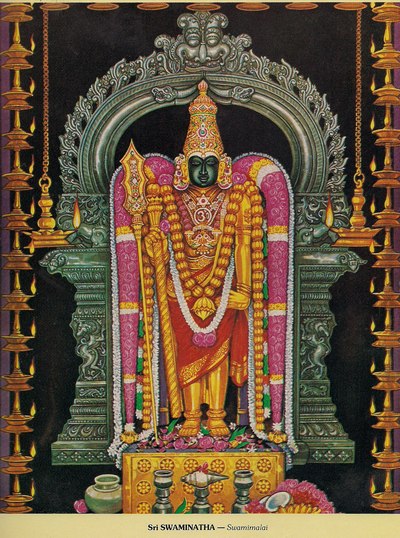
The inscription explicitly names the presiding deity as Swaminatha, proving that the Lord has been worshipped under this exalted name since the era of Krishnadevaraya.
2. Bilingual Inscription & The Epigraphical Details
The royal record is engraved in both Tamil and Sanskrit. The Sanskrit portion mentions that the imperial gift was solemnised on Mura-vairi-bodhana-dina — the sacred day when Lord Subrahmanya imparted supreme Brahma-Jnana to Lord Vishnu (Mura-vairi), which according to the Tamil text coincided with Uttana Dvadasi.

The present Swaminatha Swami shrine stands on an ingeniously constructed artificial hill with 60 ascending steps (representing the 60 Tamil years). Since the fertile Chola delta had no natural mountains and Lord Muruga is the deity of the Kurinji (mountainous) landscape, this magnificent stepped hillock was constructed in accordance with Agamic architectural principles.
3. Endowments by Sevvappa Nayak & Minister Govinda Dikshita
Some decades later, another eminent ruler of Thanjavur, Sevvappa Nayak (son of Thimmappa Nayak of Nerkunram), made extensive wet and dry land endowments for the abhisheka of Kumara, ghee lamps, and the Velayudha Swami Matha on 15th October 1573 CE.
The inscription records detailed administrative divisions: Swamimalai was included in Parantakanadu, which fell within Innambarnadu in Vikramacholavalanadu, under the larger Thiruchirappalli Usavadi (province). Sevvappa Nayak, who began his career as an adappam (trusted close attendant) of Krishnadevaraya, was married to Murtimamba (sister-in-law of Emperor Achyutaraya) and received the Tanjore kingdom as Stridhana, founding the famous Tanjore Nayak dynasty.
Iconography of the Sanctum
The main sanctum image of Lord Swaminatha stands holding the Amrita Kalasa (pot of nectar) and Akshamala (rosary) in His holy hands — the ultimate symbols of the “Giver of Knowledge and Immortality”.
The Advent of Sri Govinda Dikshita
The reign of Krishnadevaraya brought many distinguished Vedic scholar families to the banks of the Kaveri. Foremost among them was Govinda Dikshita, an intellectual titan, Vedic polymath, and administrator affectionately called “Ayyan” by the Nayak rulers. Serving as Chief Minister to Sevvappa Nayak, Achyutappa Nayak, and Vijaya Raghunatha Nayak, Govinda Dikshita revolutionized agriculture by excavating major irrigation networks, which are celebrated to this day as “Ayyan Vaykkal”. Swamimalai became the cherished family deity (Kula Deivam) of Govinda Dikshita.
4. Divine Ancestry of Kanchi Paramacharya Pujyasri Mahaswamiji
The Birth of Jagadguru Sri Mahaswamiji
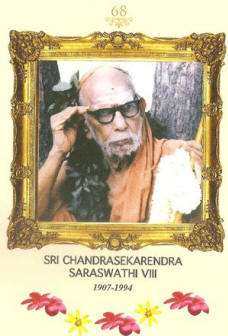
The illustrious 68th Shankaracharya of Sri Kanchi Kamakoti Peetham, His Holiness Jagadguru Sri Chandrasekharendra Saraswathi Mahaswamiji (who walked this earth for a century as a living divinity), was born on His maternal side in the direct lineage of this great statesman-saint Govinda Dikshita!
Mahaswamiji's grandfather Ganapati Sastrikal served with distinction as the Chief Administrator of the Sri Kanchi Kamakoti Math. His father, Subrahmanya Sastrikal, an eminent educationist, had Lord Swaminatha of Swamimalai as his Kula Deivam (family deity), and therefore named his divine child Swaminathan, who later ascended the Peetham to become the revered Mahaswamiji.